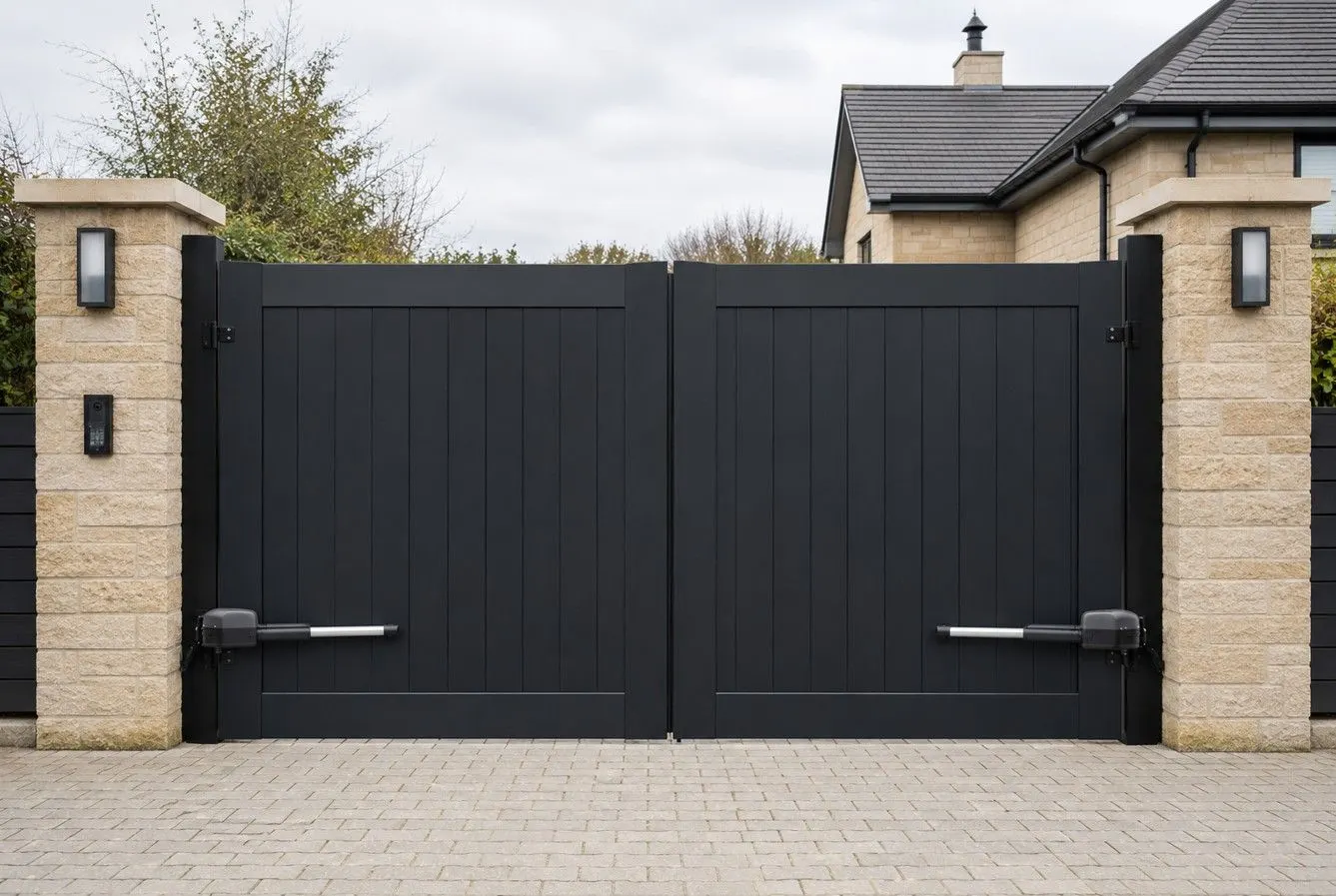
ElectriGate logo

ElectriGate · What to expect

Electric Gate Installation What Happens, Step by Step

From first survey to handover, knowing how an electric gate installation actually runs makes the whole process easier to plan around. Here is what your installer does, how long each stage takes, and what needs to be ready before anyone arrives on site.

Survey before every quote

Most installs complete in 1–2 days

Groundworks & electrics handled

BS EN 12453 compliant installations
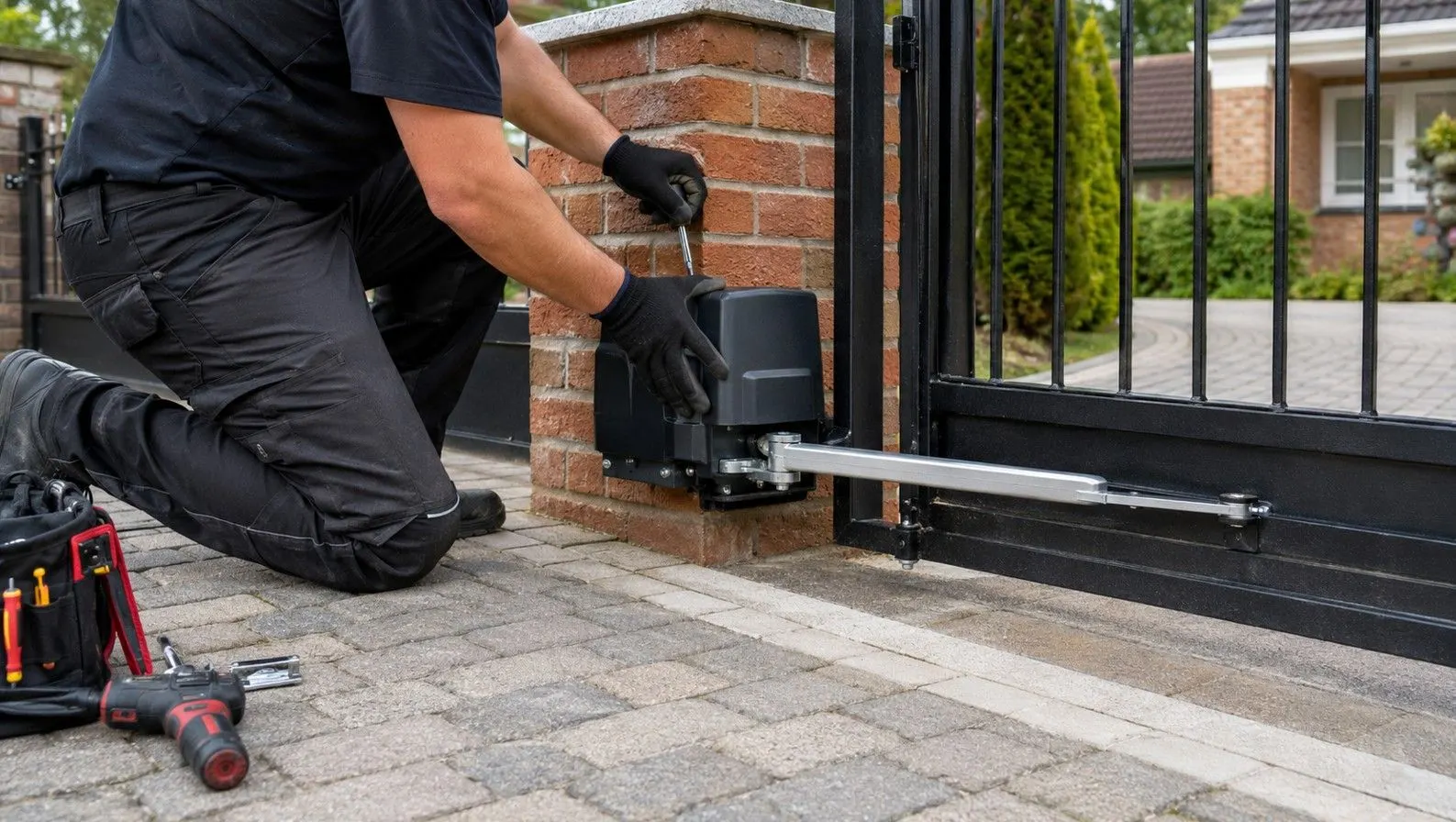
Electric gate installer fitting a motor unit to a brick pillar at a residential property

Before installation day

What happens before the work starts

Site survey

Your installer will visit to assess the entrance, measure the opening, check pillar condition, identify cable routes and confirm the full specification. For most residential projects this takes around an hour and is free of charge.

Provisional quote from photos

In many cases your installer can provide a realistic cost indication from good photos and measurements before visiting. When submitting your enquiry through ElectriGate, include clear photos of your entrance from both sides, your approximate gate width and details of any existing pillars.

Planning permission

Most residential electric gate installations fall under permitted development rights and do not require planning permission. Exceptions apply to listed buildings, conservation areas and gates over 1m adjacent to a highway.

Preparing your property

Keep the entrance area clear on installation day and ensure there is vehicle access to the site. If new posts are being concreted in, they will need 24–48 hours to cure before the gates and motors are fitted — your installer may split the work across two days.
⚡ELECTRIC GATE INSTALLATION

Installation day

What happens on installation day

Most residential installations are completed in one to two days. Here's a typical sequence of work so you know what to expect.

1

Posts and groundworks

If new pillars or posts are required these are installed and set in concrete. Cable trenching for in-ground loops or long cable runs to the house is also done at this stage. New posts typically need 24–48 hours to cure.

2

Gate hanging

The gate leaves are hung on the pillars and checked for alignment, level and swing clearance before any motors are fitted. Getting this stage right is critical to smooth, long-term operation.

3

Motor fitting

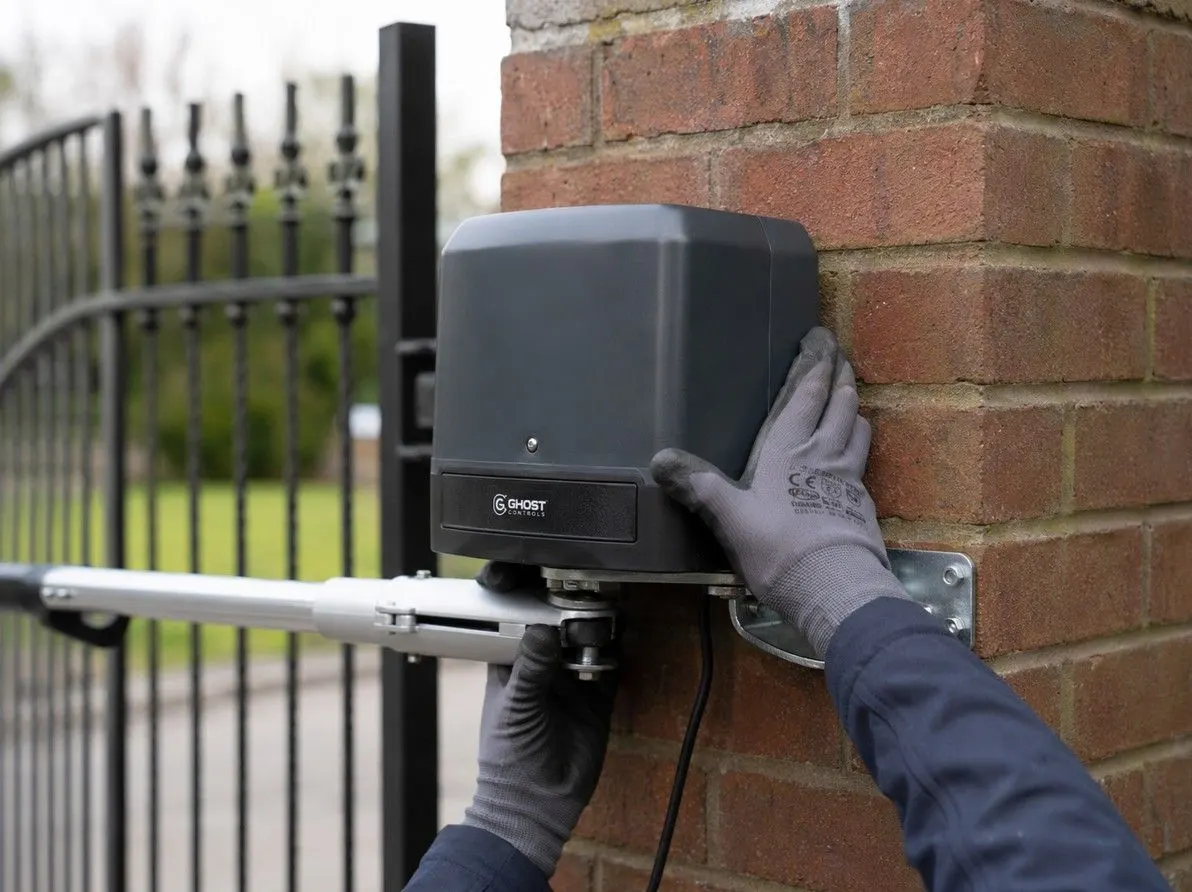
Motors are fitted to each gate leaf — either surface-mounted ram units at the hinge point or concealed in-ground motors beneath the pillar base. The motor type will have been agreed at survey stage.

4

Electrical connection

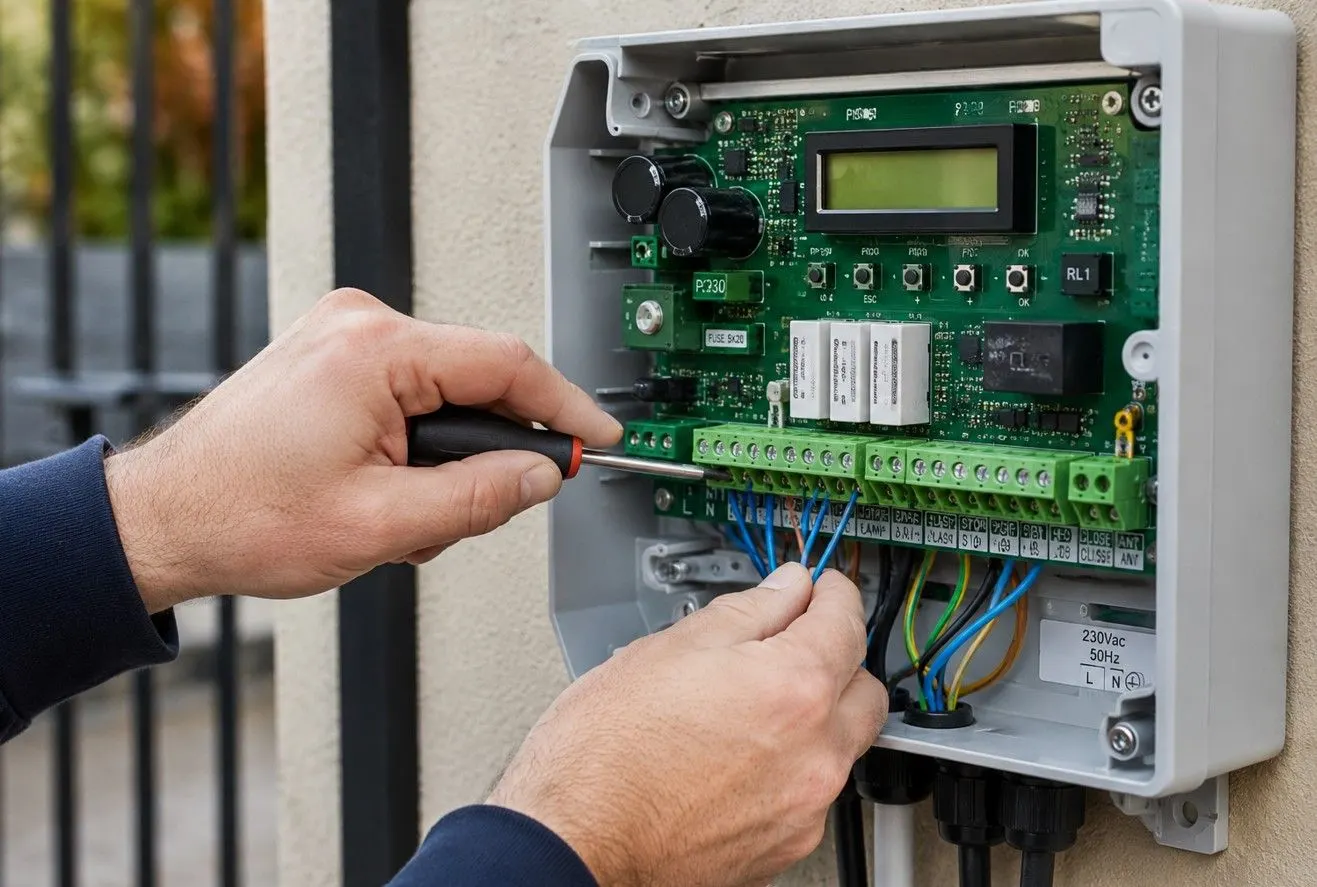
The control panel is wired and powered. Cable runs from the house or power source to the control panel are completed and concealed where possible.

5

Safety devices

Photocell beams, safety edges and any additional safety devices are fitted and tested to BS EN 12453 standard — the UK safety standard for power-operated pedestrian and vehicle doors and gates.

6

Access control

Intercom, keypad, remote fobs, GSM module or smartphone app connected and programmed to your requirements. Additional users can be added at this stage.

7

Testing and handover

Full system test across all functions. Your installer demonstrates operation, shows you the manual release procedure in case of power failure, and hands over all documentation including compliance certificates and warranty information.

How long will it take?

Typical installation timelines

1 day

Standard installation

Existing pillars in good condition, surface-mounted motors and a straightforward cable run. Gate, motors, safety devices and access control all fitted and commissioned in a single visit.

1–2 days

New posts required

New posts concreted on day one. Return visit on day two or three to hang the gates and fit the motors once the concrete has fully cured. Most common project type.

2–3 days

Complex installation

In-ground motors, significant groundworks, long cable trenches or smart home integration. Your installer will advise the likely programme at survey stage.

What typically adds time

In-ground motors

New pillars needing cure time

Long cable trenches

Difficult site access

CCTV or smart home integration

Structural pillar repairs

After installation

Looking after your electric gates

Annual servicing

Electric gates should be serviced once a year — lubrication, safety edge testing, motor force calibration, photocell alignment and general checks to keep the system running safely and reliably.

Safety compliance

All installations must comply with BS EN 12453. Your installer will provide a declaration of conformity at handover confirming the installation meets the standard. Keep this document safely.

Warranties

Warranty terms are agreed directly with your installer and typically cover the gate structure, motor units and control equipment separately. Confirm all warranty terms at handover and keep documentation in a safe place.

Manual release

All systems have a manual release for use during power cuts. Your installer will demonstrate this at handover. Keep the release key in an accessible location and make sure all regular users of the gate know where it is.

⚡ FREQUENTLY ASKED QUESTIONS ABOUT ELECTRIC GATE INSTALLATION

The motor and control panel wiring is typically carried out by your gate installer, who will be experienced in low-voltage electrical work. The mains power connection from your consumer unit to the gate supply point should be carried out by a qualified electrician if not already in place. Your installer will advise on this at survey stage.

Yes, but it depends on the slope direction and severity. Slopes running across the gate line (side to side) have little impact. Slopes running toward the gate (front to back) can affect swing gate operation — a sliding gate is often more suitable in this case. Your installer will assess this at survey stage.

Post installation requires excavation for the concrete footings. Good installers minimise disruption and reinstate surfaces neatly. If cable trenching is required, blocks or slabs are lifted and relaid. Discuss surface reinstatement with your installer when agreeing the scope of work.

Yes — installations proceed year-round. Very cold weather can affect concrete curing time for new posts, which may extend the overall programme slightly. There are no other significant seasonal restrictions.

A complete installation including gate, posts and Level 1 automation starts from around £3,800 for a smaller entrance. See our full cost guide for a detailed breakdown by gate type, width and automation level

The installation is carried out entirely by your local independent installer. ElectriGate connects you with the right specialist but plays no part in the physical work. All responsibility for the installation, warranties and aftercare lies with you and your installer directly.

Areas we cover

Find your local fabricator

Choose your region to see every town we cover, or go straight to one of our busier locations below.

By region

Cambridgeshire

16 locations

West of Scotland

14 locations

Popular locations

Cambridge

Cambridgeshire

Peterborough

Cambridgeshire

Huntingdon

Cambridgeshire

Don’t see your town? Every location we cover is listed on our areas we cover page, or send us your postcode and we will confirm.

Ready to get started?

Get your free electric gate quote today

Tell us your requirements and we'll match you with the best local installer - usually within 24 to 48 hours.

ElectriGate logo

ElectriGate connects homeowners and businesses with trusted local electric gate installers across England and Scotland. All enquiries are free with no-obligation.

All Rights Reserved | ElectriGate  - Supporting Independent Local Installers

© 2026

ElectriGate is a Trading name of My Business Buddies.

Company Number:16641926

Registered Address: 4 Marlborough Road, Woodthorpe, Nottingham NG5 4FG