
Buyer’s guide
Which type suits your entrance, what the materials actually mean in practice, how the automation works, and what the law requires. Written by people who make gates rather than sell them, and honest about the things that catch buyers out.
The basics
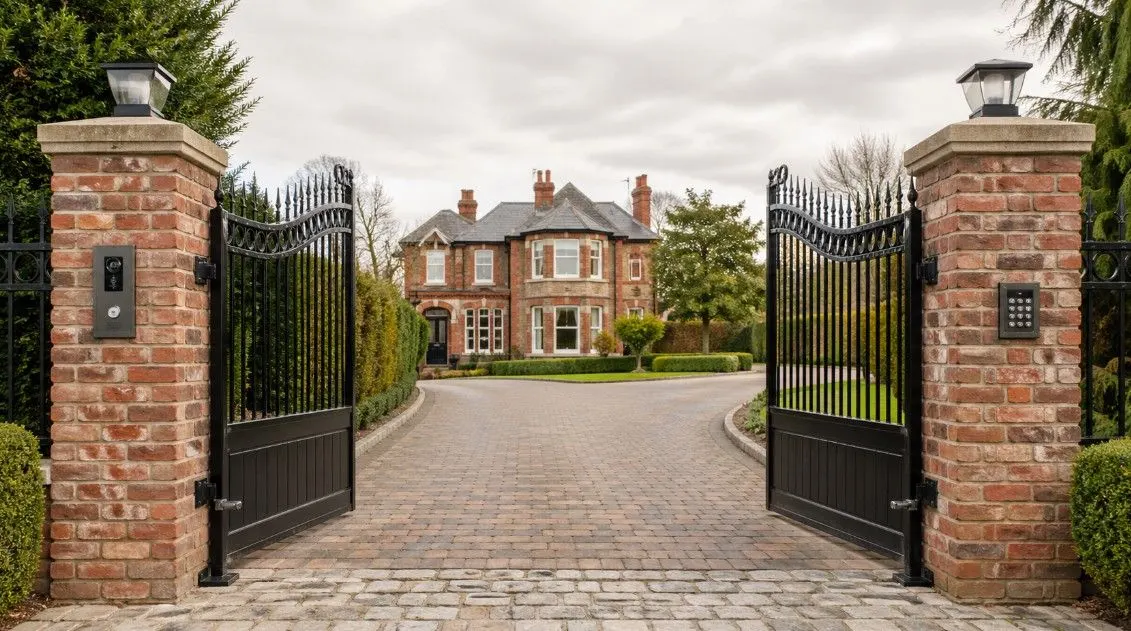
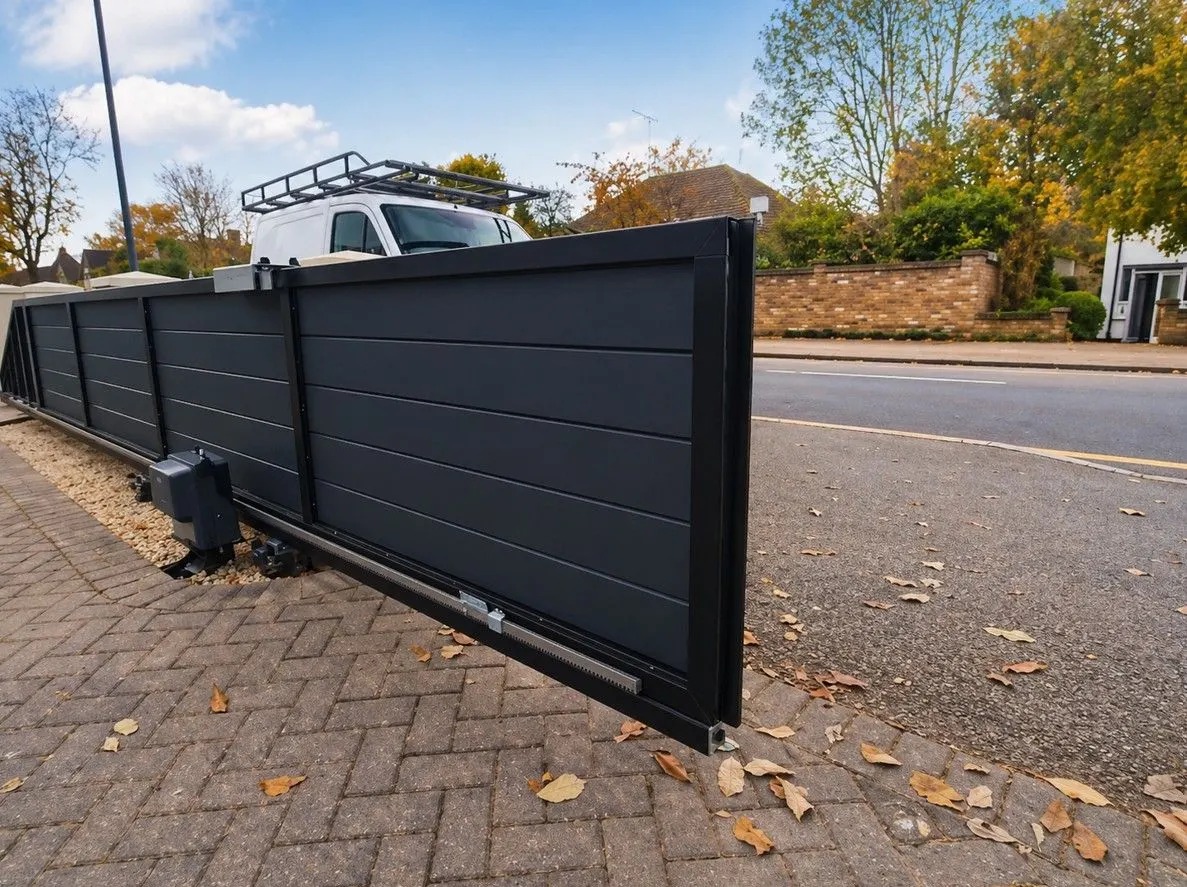
Electric gates — also called automated or motorised gates — are driveway or entrance gates fitted with a motor that opens and closes them without anyone getting out of the car. They are operated by remote fob, keypad, intercom, a vehicle detection loop set into the driveway, or a smartphone app.
The gate and the automation are two separate purchases that happen to arrive together. The gate is a piece of fabricated metalwork; the automation is a motor, a control board and a set of safety devices. They are specified independently, and a good installation gets both right — a well-made gate on an undersized motor fails just as surely as a cheap gate on a good one.
If you already have gates, you may not need new ones at all. Automating existing gates is possible where they are structurally sound and the posts will carry the load, and it typically costs around half what a new automated installation does.
The first decision
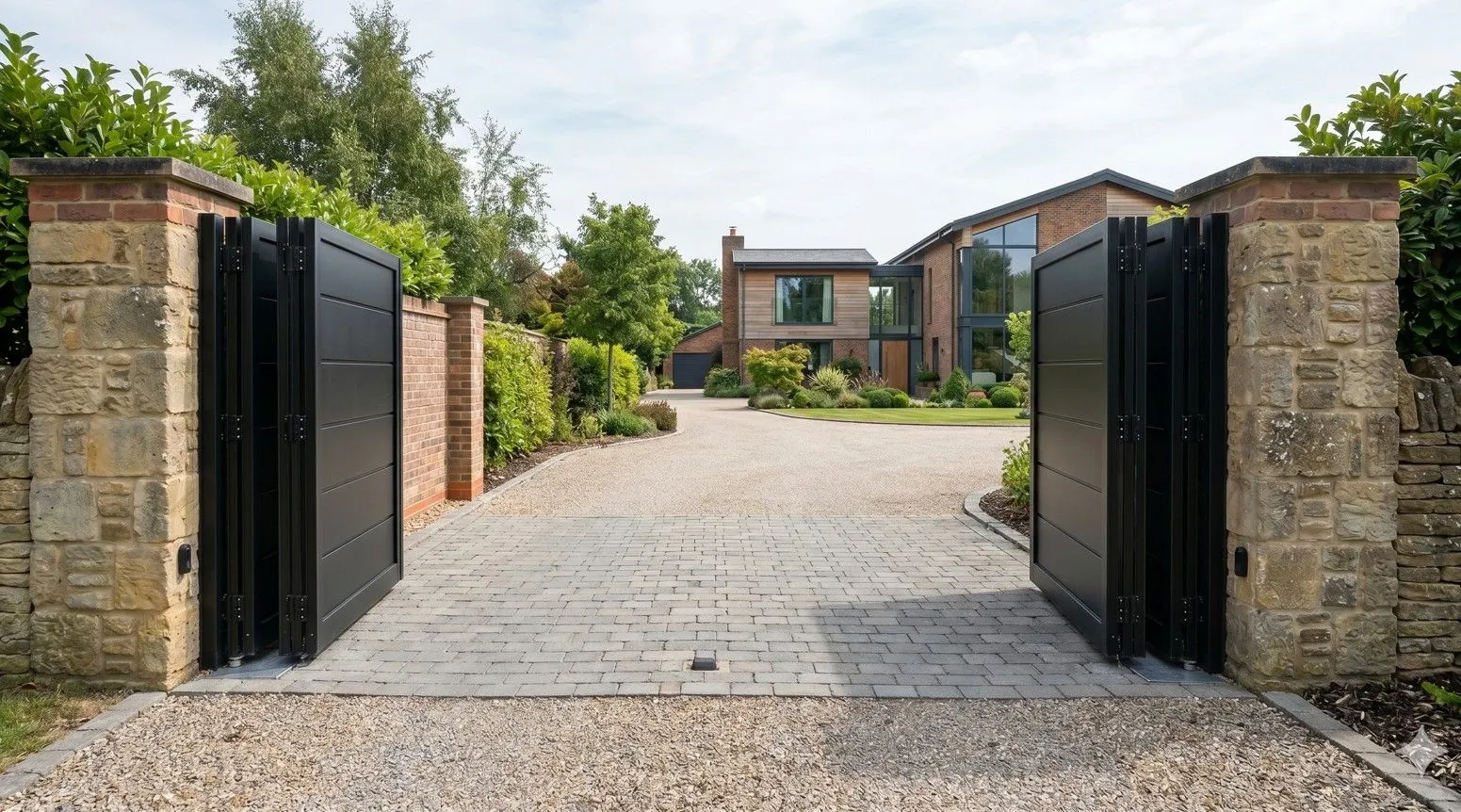
Almost everyone starts by thinking about how the gate will look. The more useful starting point is how it will move, because that is decided by your entrance rather than by preference — and it rules some options out before design comes into it at all.
Before you fall for a design
Five minutes with a tape measure will tell you more than an afternoon of browsing. These are working guides — your fabricator will confirm at survey, but they will rule things in or out straight away.
One rule applies whatever you choose: a gate must not swing outward over a public highway or footway, however quiet the road. On a shallow frontage that rules out an outward-opening swing gate entirely, and it is the single most common reason a design has to change.
What it is made of
Material affects appearance, weight, motor sizing, and how much attention the gate needs over its life. The weight point matters more than people expect — a heavier gate needs a bigger motor and more substantial piers, so the material decision has cost consequences beyond the metalwork.
The part behind the gate
The motor and controls are specified separately from the gate, sized to its weight and to how often it will be used. Brands commonly fitted in the UK include FAAC, BFT, Nice and Came.
Already have gates you like? Automating existing gates is often possible and costs roughly half what a new installation does — provided the gates are sound, the piers will carry the load, and the weight falls within an operator’s range.
What the law requires
Common questions
Next steps
Ready for a price? Send your postcode, the width of your opening and a few photographs using the form below, and we will pass it to your local fabricator.
Ready to get started?
Tell us your requirements and we'll match you with the best local installer - usually within 24 to 48 hours.
ElectriGate connects homeowners and businesses with trusted local electric gate installers across England and Scotland. All enquiries are free with no-obligation.
All Rights Reserved | ElectriGate - Supporting Independent Local Installers
© 2026
ElectriGate is a Trading name of My Business Buddies.
Company Number:16641926
Registered Address: 4 Marlborough Road, Woodthorpe, Nottingham NG5 4FG